Employment Claims Tribunals (ECT)
ECT
Just Tell Me
The Employment Claims Tribunals hear and decide certain salary-related and wrongful-dismissal disputes in Singapore that remain unresolved after TADM mediation.
Also called: ECT, Employment Claims Tribunal
Explain Like I’m Five
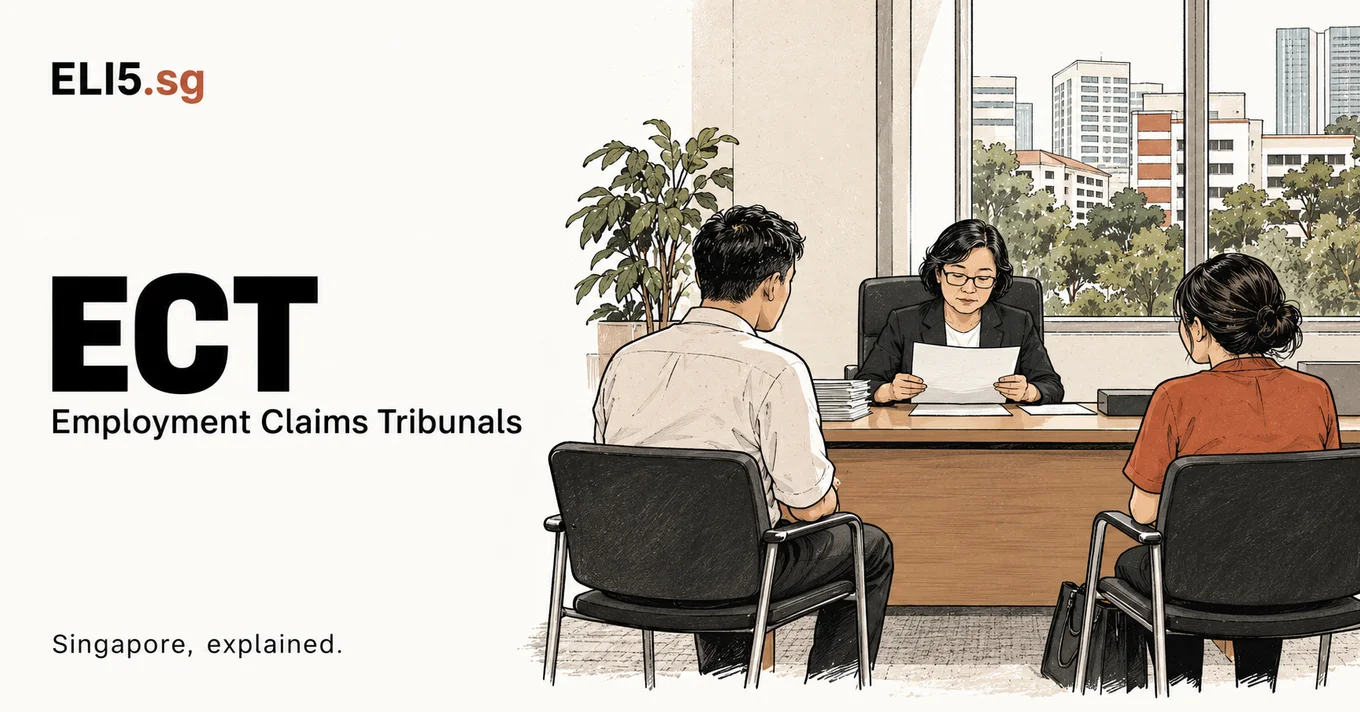
When a worker and employer disagree about a covered employment claim, discussing it may not settle the issue. At an ECT hearing, a judge called a tribunal magistrate considers the parties’ cases and makes a decision. This is adjudication: deciding a dispute, rather than helping the parties negotiate an agreement.
How It Works
Mediation at the Tripartite Alliance for Dispute Management (TADM) comes before an ECT claim. A mediator helps both sides look for a settlement; an unresolved claim may proceed to the ECT subject to its requirements. Settlement can still happen during the court process, so not every claim reaches a hearing.
Where You’ll Run Into It
In Singapore reports about unpaid salary or disputed dismissals. Certain contractual claims can concern an Annual Wage Supplement or retrenchment benefits, but the tribunal does not hear every workplace complaint.
For the wider government–employer–union partnership behind the word “tripartite”, see tripartism.
Example
“The report mentions TADM mediation first, then an ECT hearing. Are those the same thing?”
The reader is distinguishing an attempt to reach agreement from a tribunal hearing where a judge can decide the claim. Neither label tells the reader who will win.
Sources
Related
- workAWS (Annual Wage Supplement)Updated
In Singapore employment, AWS means Annual Wage Supplement, a single yearly payment often called the 13th-month payment.
- workMOM (Ministry of Manpower)Updated
MOM is Singapore’s Ministry of Manpower, responsible for workforce and workplace policies, including employment conditions, workplace safety and foreign manpower.
- workRetrenchmentUpdated
Retrenchment is dismissal because a job becomes redundant or an employer reorganises its business or work.